E.B White with the benefits of hindsight
21 juni 2011 | In Uncategorized | Comments?Almost shockingly, E.B. White’s essay ”Here is New York” takes a turn to the macabre. Published in 1949, the following passage strikes the reader as remarkably contemporary:
”The subtlest change in New York is something people don’t speak much about but that’s in everyone’s mind. The city, for the first time in its long history, is destructible. A single flight of planes no bigger than a wedge of geese can quickly end this island fantasy, burn the towers, crumble the bridges, turn the underground passages into lethal chambers, cremate the millions. The intimation of mortality is part of New York now: in the sound of jets overhead, in the black headlined of the latest edition”
It continues:
”All dwellers in cities must live with the stubborn fact of annihiliation; in New York the fact is somewhat more concentrated because of the concentration of the city itself, and because, of all targets, New York has a certain clear priority. In the mind of whatever perverted dreamer who might loosethe lightning, New York must hold a steady, irrestible charm.”
The WTC not being conceived of yet, White thought the likely target to be the soon to be raised United Nations building.
A tale of three cities
20 juni 2011 | In Self-indulgence | Comments?
(Another rare venture, this time into travel writing).
Five minutes out of a long, cold shower, and only five minutes before the late night Manhattan heat and humidity knocks me over again, so I better make this quick:
In his famous essay ”Here is New York”, E.B. White writes that there are roughly three New Yorks. One consisting of the people who have always lived here, who brings the history, the stability, the foundations for the city. These are basically unimpressed people. Then, the settlers, for whom New York was the big goal. These people bring the joy, the creativity, the drama. But, importantly, we also have the third New York: the commuters. The people who only work here. White is not too kind to these people, but credits them with the nerve, the pulse, the restlessness. ”This New York is the city that is devoured by locust each day and spat out each night”, White writes.
The relative absence of this category, as a big article in the Village Voice pointed out, is one reason for staying in the city during the summer. White seem to think of them as soul-less creatures, based on their obsession with time-tables and reluctance to walk aimlessly in Central Park. Meaning that you don’t actually have to wait until summer, the Park and, by implications, the museums and restaurants (at night time) are free of these people as well. White may recognize that they are needed for economic reasons, but he’s not too happy about it. And while the reslessness accounts for many of the bad things associated with New York (the stress, the rudeness), perhaps there are good things too. Even the creative settlers often end up doing work in organizations, firms, theaters, partly run by commuters, and thus being forced to deliver the goods.
Three New Yorks, as anyone will tell you as soon as look at you, is a massive underestimation. It takes three minutes by foot from Ivy League Columbia to what seems like deepest Harlem. A fancy restaurant may be located less than a block from a location where it would be unimaginable. If Jon Stewart is in the audience and hears the start of a predictable joke on Letterman, he can run over to his own studio, press ”record” and yet beat Letterman to the punchline. The thing with the true, large, number of New Yorks is that many of them are really tiny. In most places, if you feel that you just walked into the wrong neighbourhood, you better turn around. Here, for the most part, you just keep walking until it changes again.
This time, we are visting the children’s New York (the true New Yorkers perspective of which is excellently described in Alan Gopnik’s ”Through the Children’s gate”). This means playgrounds, Museum chases, reluctant shopping and what can only be desribed as a version of the Stendhal Syndrome at FAO Schwartz. It also means, as any New York visit does (and any visit at the Metropolitan Museum of Art, for that matter), that you will rush and briefly note things that in fact merit all your attention. I passed the Seinfeld diner today, and didn’t even stop for a photograph. We’re in the city where the bookstore The Strand is, and are actually considering giving it a miss.
Wishing that we could stay and longing to be back home again. Comitting touristy mistakes and doing touristy stuff, yet so nearly mentally living here already. Opinionated about zoning laws, public transport, rent control. Trying to squeeze yet another item in, catching the right train and so, finally, Worrying, that by coming here nearly every year, we’re turning into E. B. White’s commuters. Whenever you go home, it’s just before the fun begins.
The moral relevance of hate: On motives, harms and expressions
31 maj 2011 | In Ethics Hate Crime Moral philosophy Moral Psychology politics | Comments?Motive and criminal law
The standard interpretation says that a Hate Crime is a crime motivated by animus towards a group on basis of race, religion, etnicitiy, belief, sexuality, ability etc. The difficulty, and much of the controversy, surrounding Hate Crime legislation, concerns this emphasis on motive. Usually, we are punished for for our actions, occasionally also for our intentions (which speaks to culpability), but not for our reasons or motives. Doing so, the critics argue (See James Morsch The problem of motive in hate crimes (1992)), would 1) introduce a new mens rea (”guilty mind” )into criminal law 2) ”punish thought” and 3) be exceedingly difficult to prove.
Since we don’t have direct access to peoples motives, we have to rely on circumstantial evidence (arguably, this is so for intentions as well). Even if we can find such evidence for hate motive, it’s difficult to show that this was the only or the main motive behind a crime. In consequence, hate crime convictions are rare.
Motive and expression
Are motives essential to hate crimes? Or is it rather a matter of how the crime is perpetrated? Rather than hate itself, it is the hate expressed that convert a crime into a hate crime. ”Circumstantial” evidence, such as words uttered during the attack, would then be more than just evidence: it would be constitutive of the crime as a hate crime. If ”expression” is what is important to hate crime, it’s no longer a problem that circumstantial evidence may be misleading as to the motive of the perpetrator – what’s being expressed is independent of that motive. My motive in saying ”there is a phone call for you” may be to take your seat while your gone, but the meaning of my statement is not altered by that fact (See Blackburn Group minds and expressive harm 2001).
For illustration, consider the table below. On the one hand, we have the question of motive. Let’s simplify matters and say that an act is either motivated by hate or not motivated by hate. On the other hand, we have expression and again: hate expression or non-hate expression. In the table, we find two relatively easy cases, and two difficult ones.
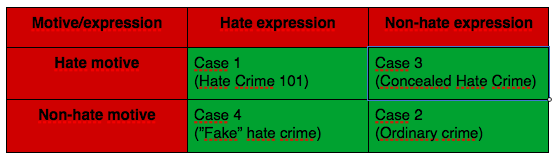
The easy cases
1) Hate Crime 101 In the top left, we find a hate motived crime expressing hate. Painting a swastika on the wall of a Jewish cemetery, say. This is a clear cut case of a hate crime.
2) Ordinary crime In the bottom right, we find the non-hate motivated, non-hate expressing crime. This is not a hate crime. (There is an added dimension not considered here: whether the hate is perceived or not. This is independent of the other factors)
The difficult cases
3)”Concealed hate crime” In the top right, we have a case where I’m motivated by hate, and I select a victim representing the group I hate. But I make it look like an accident, or am persuasive in arguing that my motive is greed or something else. In this case we have the two normal conditions ”crime” plus ”hate motive”. What we don’t have is hate expression. This, of course, means that we have no evidence of a hate crime. But is it still one?
4)”Fake” hate crime In the bottom left, we find cases where the means used for the crime has all the hallmarks of a hate motivated attack, but the motive is something else. To create a diversion, say. Or, even more poignantly: my motive may be to cause as much harm as possible, and I’ve decided that a racist-looking attack is the best way to cause harm and societial unrest.
What matters, motive or expression?
Let’s concentrate on 4). 4) may seem just as bad as 1). There are two lines of reasoning behind that statement. First: if what makes hate crimes worse than other crimes is that they (tend to) cause more harm than other crimes, then 4) is clearly as bad as a ”genuine” hate crime. If the victim and the victimized group thinks it is a hate crime, the same sort of emotional pain, insecurity and suspicion arise. Second: if what makes a crime a hate crime is the motive expressed, rather than the actual motive, 4) is a hate crime, and thus, trivially, as bad as a hate crime.
Taking expression to be essential to hate crime, and thus treating 4) as an example, has certain benefits.
If we think that bringing motives into legislation messes things up, legally and evidence-wise, focusing on expression – by definition publicly available (although it might take som decoding) – is a good replacement. An improvement, even.
We have other options, however. 3) May be a hate crime, but not as bad as 1) and 4). 4) may be as bad as 1), but not a hate crime. Alternatively: if we think 1) is worse than 4) motive may make things even worse. If expressing hatred cause the extra harm, this is one aggrevating factor, but actual hate may be another. We then have three conceptually distinct versions of hate crime – mere expression, genuine expression, and concealment. We thus have the conceptual means to justify different punishments for each of these.
On the badness of motives
I mentioned two cases of ”fake” hate crime. First: I want to cause a diversion while I commit yet another crime, say, or I want something to keep the media attention away from other affairs for a while. This is sneeky, cynical even, but does not make that part of my criminal activity worse. But what if my motive is that I want to cause as much harm as possible? I don’t care about the victims race, I only care about them as ”vehicles of harm”. If I could find some other means of causing even greater harm, I would. This sort of sadistic, yet ”equal opportunity” motive seems on the face of it to be as bad as hate motive. If motives matters, then, and Hate Crime legislation suggest that it might, then we may have to open the door for other punishment enhancements. This, the critics argue, is a dangerous door to open. We may certainly make the moral case that certain motives are worse than others, but this may be one moral value that should not carry over into legislation.
Putting our focus on expression, rather than motive, fits the Hate Crime category into a classic conception of the law as dealing with what people do, rather than with what they think or feel.
Hate Crime Economics
27 maj 2011 | In Crime Ethics Hate Crime politics | Comments?
Justifications for punishment enhancements. The arguments in favor of hate crime laws and for punishment enhancement for hate/bias motivated crimes are manifold. They are based in a number of different views on the justification for punishment – be it retribution, restoration, education/rehabilitation, deterrence, instrumental, societal protection or what have you. In his 2006 paper ”A Defense of Stiffer Penalties for Hate Crimes” Philosopher Christopher Heath Wellman argues that all of the usual theories of punishment when applied to this domain come out in favor of punishment enhancement for bias motivated crimes. If true, this is good news – it means that the case is not dependent on a contentious issue on the justification of punishment. We might want to reach a decision on that question anyway, but we don’t have to before deciding on whether to punish hate crimes more severely than parallel crimes.
Hate crimes increasing. There is, however, one argument that is lacking from Wellman’s account, one that I’ve found myself thinking about lately, one that takes as a premiss the proposition that Hate Crimes are on the rise. This is a debated question (see for instance Jacobs and Potter’s book ”Criminal Law and Identity Politics”), because A) There is a very real issue whether the crimes are increasing, or just the reporting and B) the criteria varies between countries and the gathering of data is not fully standardized. We don’t know quite that thing there is ”more” of now is the same thing that there was ”less” of earlier. I will put these question to aside for now, and assume that we are right to worry: Hate Crimes are increasing.
If a type of crime is common, or is becoming increasingly so (Wellman points out that most instances of rape are, in fact, hate crimes toward women, and if so Hate Crime is much more common than previously thought) two factors springs to mind – 1) Attitudes are changing as to find them more acceptable (as with piracy, say), or 2) Deterrence at current rates is not working. I will focus on 2).
Punishments are costs. On the simplified economic analysis I’ve written about before (not because I think it’s correct, but because simplification brings out relevant aspects) Punishments are costs. Crimes are committed when the cost (punishment x risk of detection) is deemed acceptable. If crimes of a certain type is on the rise, and we want to change that trend rather than the law, we need to increase the cost by strengthening the punishment. If our aim is deterrence, we might want to increase punishment for crimes and transgressions in general that are on the rise entirely independently of how ”bad” the crime/transgression is. If this is our justification for punishment enhancement for Hate Crimes, we don’t need to argue that hate crimes are worse in order to reach that conclusion. This justification, mind, has no sense of proportion in it self, but only gains one if the class of relevant criminals has such a sense.
This, of course, only focuses on the cost – benefit analysis of the criminal. We can add such an analysis for the legislating body. Society, say. For society, Hate Crimes are a costly – it worsens relations between groups, it causes emotional and physical harm, it makes successful collaborations more unlikely, it halts societal progress etc. Prisons are costly too, of course, so we need to calculate the likelihood of an enhanced punishment to deter crimes of the targeted sort. If it is likely, we have proportionality between the strength of the punishment and the badness of the crime – if that is derived from a cost we are aiming to avoid.
The cost of prejudice vs the benefits of freedom of thought. Punishment is of course (as Wellman points out) not the only tool to decrease the frequency of crime, and perhaps not the most effective one either. But it is one of them, and definitely one of the most forceful means for a society to express its commitments to certain values. This, in turn may add to the cost for the crime (not only the cost of punishment, but the cost of being at odds with the expressed values of society, say). If we deem it very important, for economic reasons, that hate crimes decrease, we need not make up our minds about what it is in the mind of the criminal that tend to cause these crimes – that is not part of the justification of the punishment. It’s very possible, even likely, that prejudices have great costs. We may then, on this analysis, very well use legislation and dose out punishment in order to discourage prejudices. There may also be costs for legislating thought, of course – sense of freedom of thought is probably very important from an economic point of view. But to enhance punishment on basis of motivation is not to punish mere thought, and thus may not undermine these benefits of freedom of thought.
How much for a hate crime? What is a reasonable policy for ”prizing” things? Is it just to be set by these factors, or is there actually a prima facie, pre set reasonable punishment for certain crimes? If we really can’t stop students from crossing the lawn on campus, should we increase the fine? Is there a limit to the punishment, independent of how frequently the transgression occurs? (Set, for instance, by how important the well-being of that lawn is to us)? In the Hate Crime context – should our policy on how to punish these crimes depend on whether they are increasing or not? Presumably, it should influence police priority. As argued before, this might also be a more effective, or more fitting, means of expressing our attitude toward hate crimes.
Enhanced punishment and proportionality If the costs involved include costs calculated for society, there is a desirable proportionality between strength of punishment and harms caused by the crime. Let’s dwell on this for a while:
The harm caused, and relevant to the status of the crime, is not just harm to the individual, but the group targeted by the crime. This increased feeling of being targeted, and afraid, is part of the harm that makes these crimes particularly wrong. Now: if these crimes are increasing, fear is likely to spread even more. Any additional crime is likely to be taken as evidence, and exemplifying, this increase and thus committing such a crime when the type is on the increase is worse than if it is not on the increase. (Of course, if they are decreasing, any additional crime may postpone the positive impact of these good news, but let’s leave that for now). Thus we can say that the crime caused more harm, is therefore worse, and should be punished more – which brings proportionality into the account again.
There is a slight complication, though: if hate crimes are on the rise the impact of one particular instance may not be that important for the general increase in fear and societal discord. This is parallel to cases where a person is assaulted by a group of people. The total harm to the person may be worse than if there was a single assailant, but the contribution of each of them may be less than if assaulting the person on their own. How should we portion out punishment in such cases? My intuition here is that the total of punishment here should not be proportional to the totality of harm caused, and thus that the individual punishment should not be proportional to the individual contribution – but to the outcome. If so, individual hate crimes on the increase should be punished more, even if the contribution to the extra harm caused by a type of crime on the increase is not larger for that individual crime.
What is wrong with Hate Crimes? Four contrast cases
24 maj 2011 | In Crime Ethics Hate Crime Moral philosophy politics | Comments?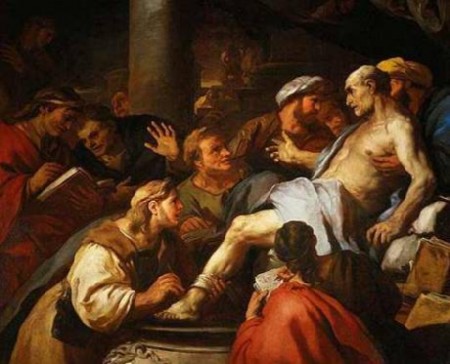
Killing Seneca – not a hate crime?
What is wrong with hate crime? Are they worse than parallel crimes? If so, why? This is the central question, and it carries into all areas of hate crime scholarship. If we can answer this question, we would have the means to determine which crimes to include under the term, and what groups of victims and groups of perpetrators are relevant.
The distinguishing mark of hate crimes is in the motivation – hate crimes are motivated by bias, hostility, animus, prejudice, hate of group. This has impact on victim selection – usually, but not always, a member of the hated group. A hate crime may also hit someone only perceived to be a member of the hated group or – and this has often been neglected – someone important to that group. Hatred against homosexuals, for instance, may target some heterosexual gay-icon. It also has important for the type of crime and the intention behind the crime – usually the intention is to hurt the community, and thus selecting means that express this hatred as loudly as possible. Again, there might be cases where the hater only need to ”blow off steam” and thus may select a victim but make it look like an accident, or a normal robbery. In such a case, the motive would influence victim selection, but the intention is not to cause greater harm to the group. It is debatable whether such a crime should be treated as worse than the crime it is made to look like.
The main two theories about the wrongness of hate crime is
1) Hate/prejudice is wrong. The motive makes the perpetrator more blameworthy
2) Hate Crimes hurt more
Both allow for qualifications – is hate/prejudice always wrong? There is debate over whether ”hate” is the right word (it probably isn’t) since it doesn’t actually imply a fault. It might be an attitude that it is always wrong to have, but it may occasionally have the right fit – hating something that is bad/evil for instance. Do crimes motivated by hate always hurt more? Why do they hurt more? Is it because the group to which the victim belong are more vulnerable when targeted because of membership of that group?
Four contrast cases
To coax out some of our intuitions about hate crime, I present four cases of crimes directed at someone because of some characteristic that distinguish them as members of a certain group. The questions we need to ask is: 1) Are all of them hate crimes? and 2) Do all of them have the property that make certain crimes worse than others?
Case 1: The standard
A member of the majority (white, say) assaults a member of a historically disadvantaged minority (black, say), for racist reasons while making this motivation known to the victim and onlookers. This is a clear cut case of a hate crime if anything is.
Case 2: The ”deserving” victim
A non-descript person attacks a sadist torturer (Because it complicates matters already complicated, I’ve avoided to use the standard example of pedophiles here) because of hatred for sadist torturers. Sadist torturers are, let’s agree, bad people and it is apt to have some sort of negative emotion towards them. Causing fear and withdrawal among other sadist torturers is not obviously a bad thing. Yet – the motivation is hate against someone because of a certain characteristic and, presumably, the sort of harm to the victimized group associated with hate crime occur. Should this qualify? If not, it might be that what’s wrong with ”real” hate crimes is not the ”hate”, but that the hate is, somehow, at fault
Case 3: The New Categories
Moral development often proceeds by inclusion – groups earlier held to be outside the scope of some moral category is recognized as important. Hate Crime legislation arguably begun with a focus on crimes motivated by race, and then included sexuality, religion, beliefs, disability, gender, identity etc. The list seems open-ended and rightly so – it is not a list that is needed, but a criterion. One group of victims that might be included and ”protected” by hate crime legislation is ”Goths”. As an example of an ”alternative” lifestyle. Goths have been victimized because of their group membership, by people motivated by hatred, and their community has felt the impact. (Although, arguably, reactions to crimes may make them stronger by getting support from the rest of society, and by making the group more close knit. Also: Some groups thrive under adversity) What is lacking is the historical disadvantage (they are not ”Goths” in the historical sense), which might make the trauma of victimization less ”deep”, but that is a difficult question to answer. One may argue that the historical disadvantage should not be pinned down to membership of this or that group, but to groups viewed as ”other” in general. In that case, the trauma may carry over. (Note however, that groups are usually quite protective of their distinctive pasts. If targeted because of your affiliation to a soccer team, don’t claim ownership to the holocaust).
Case 4: The Resilient Group
Let’s say I’m targeted because I’m a Stoic. As a Stoic, I don’t mind, and my fellow Stoics don’t mind either. In fact, we mind less than would other victims assaulted for whatever reason. If what makes hate crimes worse is that they hurt more, this is not a hate crime that hurt more, and presumably should be punished less. If what makes them worse is that they are motivated by hate (apt or not), then this is a hate crime in the proper sense and should be punished as much.
Conclusion and further questions
The two rationales for hate crime legislation are both important: hate and prejudice should diminish, especially the ones that tend to be expressed in hurtful acts. And the additional harm caused be targeting someone because of a characteristic that matters to him/her means that it is even more important that these crimes diminish, than that parallel crimes does. It’s bad for the victim, for his/her group and for society in general. But having, and expressing, prejudices against someone who can take it is not as bad as having, and expressing, them against someone that is vulnerable. The predictable harm is not as great, and this should have some impact on how serious we think the crime is. The resilience of the group matters when it comes to what crimes should be prioritized in order to diminish harm. Prioritizing hate crime is even more important than enhancing punishment (and might be a more apt response to what’s worrying about it, while simultaneously expressing society’s rejection of intolerance as much as punishment enhancement does).
One last consideration though: We punish hate crimes against vulnerable groups, say, because of the greater harm these crimes normally tend to have – even if this particular crime did not cause more harm (say the victim died, was viewed as a liability in the community, etc). Some, perhaps most, laws are like that – judging the act by the harm caused by that type of act, not the token. But if we are allowed to make that sort of generalization to disregard the lesser harm caused by this particular act, why not disregard it when the act is of a type that targets a resilient group? Why not say that crimes motived by hate in general tend to cause greater harm, and thus should be judged as worse, even if targeting this particular group (Stoics) does not cause greater harm?
The importance of unconscious prejudices
23 maj 2011 | In Crime Ethics Hate Crime media Moral Psychology politics | Comments?
According to the expressive theory of punishment, the main function of punishment, as of law itself, is to express the values and norms of a society. To insist on certain kinds of behavior, and to disparage others. Ideally, the laws reflects the values of the people currently making up that society, as well as those tested through time, by experience and debate, from the original lawgivers (the drafters of the constitution, say) onwards. When you commit a crime, the punishment tells you and others something about how society feels about it.
When it comes to Hate Crimes, this aspect is very important: Not only do we express norms that prohibit assaults, but we prohibit assaults motivated by, and expressing, prejudice. (In fact, a case can be made that it’s the expression of prejudice, and not its motivation, that make hate crimes worse). Even if we do not punish prejudice as such – we have other ways of expressing that norm – we punish its manifestations. And part of the motivation for doing so is to disparage prejudice as such. We could say that we punish the criminal for the hate-motivated assault, thus expressing a norm against such acts, but the punishment also sends a message against hate/prejudice in general.
Now, does hate crime legislation reflect the values of society? Are people that committed to tolerance and diversity?
The point of telling the criminal what we think is presumably linked to his/her current beliefs. So what does the hate criminal believe? What do the racists among us believe about the attitudes among the rest of us?
Legislation, government and NGO campaigning and at least some media content explicitly express commitment to diversity and resistance to racial prejudices. I take it that most ideological hate criminals realize that they are a minority, and that is part of what makes them dangerous – they are in the minority, feel threatened, disregard certain societal values and believe that they are in the right. Telling them that hate crimes wont be tolerated is hardly news, and they are unlikely to care. The expressive function, then, would be failing with regard to the criminal, but perhaps succeed with regard to the broader population.
Some racists presumably believe that, in fact, most people agree with them, even if they (we) don’t quite realize it. They blame political correctness for our current liberal and multiculturalist ”opinions”. This is very likely a persuasion that drives current populist right wing politics. They believe they only need to stir the inner racist in all of us, and that people, when it comes down to it, actually agree with them.
I’m pretty sure they are wrong about our conscious values. But are they wrong about us altogether? Among others (and more forcefully than most) the psychologist Jennifer Eberhardt argues that our prejudices are often unconscious and even at odds with what we explicitly believe. Even people who don’t associate black people, say, with criminality, tend to be primed by viewing black faces to more quickly recognize images of weapons, for instance.
If such findings reflect a broad societal phenomenon, we may ask what our values are, and how deeply committed we are to tolerance and diversity. Most of our prejudices never makes it to our conscious minds, but they still influence our judgments and behaviors. Without noticing it, tend to look for evidence that confirms our unconscious beliefs, and disregard others. This is why it is so important that even the most confirmed enlightened mind among us take a look at not only the content of their beliefs, but the inner workings of their decisions and behaviors. Most votes for the right-wing parties are not directly motivated by racism, but by the rationalizations that unconscious racism make us more likely to accept.
That a belief is unconscious does not mean that it reflects a deep fact about us. Quite the contrary – the test of whether an unconscious belief is ”truly ours” is to see what happens when it becomes conscious and tested against evidence and other beliefs. Do our conscious, considered values take precedence? Or do we adjust them to fit it our previously unconscious beliefs? What does happen when we become aware of such prejudices presumably depends on further psychological factors, but also by situational factors. Its uncomfortable to face ones failings, so perhaps there is a bit of pressure to deny that it is a failing. If people around you have a theory and a political program that incorporate your prejudice, there is some appeal in accepting that theory and that political program. It’s very important, then, that we have the means to address these prejudices when they surface, and someway to work with them.
If we are serious about our commitment to diversity and tolerance, we need to confront prejudices on all levels, and express that commitment in no uncertain terms in order to counter the populist appeal mentioned above. As has been remarked for instance by George Lakoff, liberals rarely want to address the unconscious by unconscious means. We are suspicious of such manipulation, and prefer the open and honest debate and believe that ”the truth will set us free”. But it’s much preferable when our values reflect our dispositions and emotions all the way down, when we not only believe and treat people of different races that they are equal, but instinctively react that way too. This may mean a lot more work than mere conscious conviction involves.
Does expressing our commitment to these values by enhancing punishment for hate crimes have an impact on unconscious prejudices? Or does it move our attention from the Reasons Why we should not be biased to Reasons having to do with fear of punishment? If it matters what the reason is why a criminal commits the assault, does it also matters why someone refrains from committing one? These are questions for another post.
A further note on the moral status of hate crimes
20 maj 2011 | In Crime Ethics Hate Crime Moral philosophy | Comments?Whenever you look carefully at an important concept, you are likely to find that it covers disparate cases. Especially when you are looking for morally relevant aspects of things (what’s so important about being a person? What’s so good about equality?), you may find that what is morally relevant is not necessarily co-variating with the distinguishing features of the concept of that thing. (Most persons can suffer, but perhaps not all persons, and some non-persons may be able to suffer, to). When looking at Hate Crime from a philosophers point of view, two questions arise:
1) What is ”Hate Crime”? And
2) Are hate crimes worse than parallel crimes (the same act, with different motivation)? If so, why? What makes them worse?
If hate crime is to be an important moral category, these two questions better have some non-trivial connection. What transform a crime into a hate crime ought to be what makes it worse.
Currently, I’m thinking about two quite distinct instances of hate/bias motivated crimes, and whether they should be assigned different moral status. Both rely on the connection between crime, intention and harm. In both cases, we postulate that the criminal has a thought through motivation for his/her actions and that his/her prejudice is actually part of consistent (though false) moral position.
First case: The mistaken racist
This person holds the believe that people of a certain race are inferior, and that they therefore matter less. To beat up a member of this class causes LESS harm than would beating up a person of the racists own group. This view is equivalent to the view held by most people about animals: while we should not harm them, doing so is less bad than hurting a human. This person would argue that since his crime hurts less, proportionality demands that it be punished less. This view seem to have been almost part of the system before the civil rights movement gathered momentum.
Second case: the political racist
This person believes that hate crimes hurt more, and that’s part of the motivation. He/she wants to cause the maximum amount of harm in order to threaten people of the targetted group for participating in society, ultimately to disappear from the neighbourhood/country/face of earth.
Let’s for the sake of the argument accept that these crimes actually cause the same amount of harm. Are the crimes morally equivalent? The mistaken racist does not intend or foresee the greater harm caused by the crime. Indeed, he/she believes it causes LESS harm. The political racist, on the other hand, has no such illusions. If hurting knowingly is worse than hurting unknowingly, the second case is worse.
There are interesting further questions about these cases, however: What is it that the mistaken racist believes? Is it that the crime cause less physical and emltional suffering, or is it that it MATTERS less? Is it a factual or a moral mistake? Should our judgment depend on what would happen if he/she was presented with evidence that in fact there is no morally relevant difference between the suffering of people of different races?
In the second case: does it matter if the political racist believes that everything will be better for both groups if they are separated, and the extra harm caused by the crime is regretable, but instrumentally justified? He/she may even agree that her action should be judged a crime, but that the intended long term end should be counted in her favour, and not be an aggravating factor.
Again: is it the intended harm, the predictable harm, or the actual harm that matters? How important is it whether the racist commit a ”honest” mistake?
Hate Crime: Beliefs, prejudices and aggravating factors
19 maj 2011 | In Crime Ethics Hate Crime Moral philosophy | Comments?Increasing or decreasing a sentence based on the assailant’s motive is common in the law, and although a person’s abstract beliefs may not be taken into consideration in sentencing, racial animus or other prejudice can be considered if they are relevant aggravating factors. Enhanced penalties are appropriate for biased inspired conduct because it is thought to inflict greater individual and societal harm, such as the greater possibility for retaliatory violence, emotional damage to the victim and community unrest.
William Rehnquist
The above statement includes much of what is difficult with hate crime legislation. It’s well worth dissecting.
First: The assailant’s motive matters, and can even affect the severity of the punishment. Presumably, this means that we rank some motives as worse than others. Note that ”motive” is not the same as ”intention” here. If I intended to wave at a friend and in the process hit someone in the face, my intention makes my action less blameworthy than if I had intended to strike that person. This is uncontroversial, but it does not speak to motive in the relevant sense. But say I did intend to strike him, does it matter what my motivation was? Again, it does, if my motive, or my reason, was to stop him from doing something bad, rather than merely to cause him harm. But this, again, is not the ”motive” intended in ”hate crime”. It is, in fact (and I will return to this matter again and again for the next 18 months), highly unclear what ”motive” is.
Second: But we can narrow down on what Judge Rehnquist has in mind: Motive is a proper consideration in law. But abstract belief isn’t. This is based on a liberal principle to the effect that You should not be judged by your beliefs, but only by your actions. No one denies that we should punish the crime in hate crime. The contentious issue is whether we should add punishment for the motive.
Rehnquist states that ”racial animus or other prejudice” can be considered if they are relevant aggravating factors. There are several questions that opens up from this statement – What is the relevant difference between a prejudice and an ”abstract belief”? Can’t I have a prejudiced abstract belief? Whatever the difference, apparently prejudices can be ”relevant aggravating factors”. But can’t abstract beliefs be aggravating factors too? Are they ruled out by definition? What is an aggravating factor, anyway? Again, we have to look at how the statement continues
Third: Enhanced penalties are appropriate when the act (”is thought”, but surely that’s not a necessary qualification) to inflict greater individual and societal harm. This harm based justification for enhanced punishment is influential, fairly uncontroversial, and has strong support in legal tradition. If your action cause, or is likely to cause, more harm, you are more culpable and should, according to the principle of proportionality, be punished more. Presumably, the argument is that any factor likely to make the crime hurt more, is thereby a ”relevant aggravating factor”. But then, why make the distinction between ”prejudice” and ”abstract belief”? Does a crime based on an abstract belief about racial inferiority, say, cause less harm than a crime based on racial animus or prejudice?
Fourth: The relevance of the risk of greater emotional damage to victim and the victimized group seems uncontroversial, but what about the risk of retaliation and community unrest? Should I rather pick on people who wont retaliate? Is it worse to attack a much loved celebrity than an unknown homeless person? On the flip side – if my crime cause not community unrest but community cohesion, because people come together in their condemnation of it, is my crime thereby less bad? Utilitarian terms and conditions apply.
One of the key challenges to Hate Crime legislation is that it criminalizes thought, or motive, and thus that it is incompatible with certain fundamental rights. The answer to this challenge is, usually, that we don’t punish thought/motive on its own. Only when it manifests in independently criminal actions. But, the critic insists, we ADD punishment for thought/motive. Surely, the extra punishment is for the thought/motive?
But what makes a hate crime deserving of extra punishment is not just that it is a crime committed by someone who also harbors prejudiced thoughts. It is not even just that he/she commits the crime because of that prejudice. It is that the crime works as an expression of the prejudice. Surely, that is what make these crimes hurt more. It adds insult to injury, and, as we now know, injury’s caused by viciousness rather than by accident, genuinely hurts more. What this means, I take it, is that a hate crime is not just the criminal act plus some motivation, it is another kind of act. The ”extra punishment” is thus not based on punishing the motivation as an additional extra to the already punished crime, but on punishing this other crime.
The work cut out for us now is to make this notion more clear.
Morality and Hate Crime
17 maj 2011 | In Crime Emotion theory Ethics Hate Crime Moral Psychology Psychology | 4 CommentsHate Crimes are wrong. While the ”Crime” bit already suggests as much, the ”Hate” bit pushes it definitely over the edge. We can think of acts that may be illegal, and being of a type that ought to be illegal, but which, under the circumstances, might still be the right thing to do. Or that, under certain circumstances, would be complicated enough to raise important moral questions concerning the status of the individual act. Theft is an example, the moral status of which depends on ones’ conditions and ones’ options. Killing someone perceived to pose an indirect threat is another.
But if you commit a crime against someone because you hate a group to which he/she belongs, justification seems out of the question. There is no more important interest that would be served by your acting on this hatred. And if there were (if you hate people that try to kill you, say), the ”reason” for the hatred – not the hatred itself – would provide the moral justification for the act. It then becomes important which your reason is – the hatred or the reason for the hatred. When Dirty Harry says ”Go ahead, make my day”, he is looking for a proper justification for an act that he would have liked to do anyway. Such justification lacking, DH would have been guilty of a hate crime against Punks, say.
Hatred, in the relevant sense, is rarely if ever justified. Indeed, it has been suggested that the term ”Hate Crime” be replaced with ”Bias Crime” or ”Prejudice Crime” because unlike ”Hate”, those terms imply a fault – either that the belief is false, or that it is based on insufficient evidence. ”Hate” is an unfortunate word in the context, especially if we believe that hate can occasionally be an apt feeling/attitude.
There are additional reasons for preferring such terms: being at the receiving end of hatred is very nasty indeed, nevermind how irrational that hatred is. Being the victim of a prejudice, on the other hand, puts the responsibility squarly with the perpetrator.
Hate Crimes seem to be unproblematically wrong, then: they are unjustifiable. A much more subtle question is: Can they be excused? Committing a Hate Crime may never be the right thing to do (Even if I commit it to ”blow of steam”, thus stopping me from committing an even worse crime later on, this would not be a hate crime:the motivation is not hate, even if hate is part of the explanation of the crime), but can I be blameless for committing it? Can the hate I feel, or the prejudice/bias I manifest – be overwhelming, or can it have grown within me without my knowledge, and without my being able to stop it?
A further reason to step away from the word ”Hate” is that it suggests a temporary emotional state, and comes too close to facilitating a ”temporary insanity” type excuse. When a hate crime is committed because of the criminal being provoked into a state of rage by the appearance of people of the despised group, it is not this state of rage that we wish to punish, but the disposition that made that rage a likely thing to have happened.
Even if I can not be held responsible for my emotional states (and that is a debatable point), and my emotional states may be so uncontrolled that I may not be responsible for my actions when I’m in one, I AM responsible for being the kind of person who would be provoked by certain things. If you can’t stand the heat, you should move slowly into the kitchen area in order to adjust – perhaps open a window? – and not trust yourself with any sharp utensils just yet.
Committing a crime out of hatred is not like ”temporary insanity”, but more like killing someone with your car when driving drunk.
There are more complicated ”excuse” type stories about hate crimes, however. Explanations that take a much broader perspective on criminals and criminal actions in general, and assign partial responsibility to society, to parents, to friends, co-workers, to chance. If the justification of punishment is retribution, and require pure, unadulterated responsibility, then perhaps some hate criminals should not be punished. Perhaps the only true hate crimes are cases where the hate is in some hard to determine sense YOUR OWN. If, on the other hand, we think that the function of law and punishment is deterrence, rehabilitation, public safety, and there are additional reasons to keep the law simple and displaying equal treatment, then we might have to ignore these stories and continue to view hate crimes as, in essence, inexcusable.
Sentimentalism and Sports
16 maj 2011 | In Emotion theory Ethics Hedonism Moral philosophy Moral Psychology Psychology Self-indulgence TV | Comments?
I used to care about team sports. Mostly on a national team level (local teams are too much work. I did a season as part of a supporter orchestra, however, but mostly for social reasons). I used to care how things went, and my mood would fluctuate accordingly. Opportunistically, I cared most about table-tennis, hockey and handball: sports where my national team tended to do rather well. But then one day I found myself watching a game of handball, a final I believe, and the team were doing poorly and I was very upset. Clear physical symptoms. And then I took a step back thinking ”Really? This is important enough to be upset about?”. I have never taken sports seriously since. I’ve watched it, enjoyed it, cared about it with the sort of interest intellectuals invented around the 1998 World Cup in France, but never again taken it seriously.
Now to make a ridiculously big deal out of this. It doesn’t matter weather ”your” team wins or loses, in any ”real” sense of ”matters” . It matters only when you care about it. Things matter in the game. Scoring a goal counts, things are instrumentally good or bad. There are local norms. Some of them purely conventional, arbitrary, others invented, almost discovered, to make the game more appealing or make it flow better. But it’s not important that you care about the game. Beginning with a simple case like sports (first, debunk the importance of your team winning – easy, just look at the case for caring about the other team and realize it is usually just as good. Second, debunk the importance of the values inherent to the game altogether) we can generalize to other values. Aesthetic values, etiquette. Maybe even morals. This, of course, is Nietzsche (who I had been reading at the time).
This is how a sceptic argument get started: if we can debunk the importance of this, why not everything? If the emotional impact of caring about something is based on pure conventions with no independent justification – why care about anything? Is it all arbitrary? This, of course, is existentialism (and yes, I had been reading those people at the time, to).
There are two good replies to this challenge.
First: I stopped caring about sports by questioning it’s meaning, but that’s not how the process got started. Rather, it was when caring stopped being useful. Meaning and, I would argue, value, is often generated by caring about things that has no intrinsic, independent value. This is how sentimental value comes to be. It’s very common that positive emotions generated in this way, say by your team winning, becomes tied to negative emotions generated by it’s losing. Some people manage to have the one without the other, but they are often accused of not really caring. You should care about things that doesn’t really matter, because that’s the way to generate things that do matter – positive emotions tied to changing, attention-grabbing activities. In the sports case, it was the realization that it wasn’t working: too much negative emotion, not enough positive. This is when you should kick the habit.
Second: When I noticed that this game did not truly matter, it was a contrast effect. It did not matter as opposed to other things that did. This is a quite general reply to one sceptic argument: when you realize a mistake, you do so because it doesn’t measure up to the truth. You now know the truth (even if it is just that the earlier belief was false). It doesn’t mean that everything you believe is false. Some beliefs, and some values, pass the test. When taking a similar step back from other activities, they still seem to matter.
It’s a good thing to challenge your values now and then, if only to weed some dysfunctional ones out, and reaffirm your commitment to those that truly matters.
Bonus: This, I think, is the best possible metaphor for narrowly clearing a deadline