On caricatures, freedom and the nature of assholes
13 januari 2015 | In Comedy Emotion theory Ethics Hate Crime media Moral philosophy Philosophy of Law politics Psychology Psychopathy Self-indulgence Uncategorized | Comments?I have to admit, I’m not overly fond of caricatures. Never have been. I guess sometimes they manage, just like a good metaphor does, to capture something important about its object that was not as obvious before. The thing that a caricature brings out about the object is usually intended to render it ridiculous. Most things are partly ridiculous, of course, it’s almost never a useless way of viewing a thing. But it becomes particularly useful if the thing, or person, or group, is in power, is pompous, is revered to an unreasonable extent. It becomes less so, even harmful, if the thing or person, or group, is already despised, disenfranchised, already treated as ridiculous.
The reason why I’m not overly fond of caricatures, or metaphors for that matter, is that they rely on putting emphasis on certain things at the expense of other things, and the result, the ”translation”, as it were, depends on whether that serves to correct the received view in order to reflect the actual importance of those things. Caricatures have a history of ridiculing power, and that history is well-rehearsed these days. But they also have a history of serving power. Of dehumanizing people it deems of less importance, which makes those people even easier to disregard, or even to kill.
There is an argument that says that we have freedom of speech in order to protect precisely the sort of statements that we do not like. This is spurious. It may be true that the extent of freedom of speech can be measured by exactly how offensive, vitriolic, hateful, debasing, threatening expressions that it allows, but it hardly seems to be the point of having freedom of speech. Some people will say that freedom is a value in itself. Others, like the more often quoted than read J.S. Mill, say that freedom of speech is an instrumental value, which serves a function. And it can be limited when it fails to serve that value. On this account, we can say that freedom of speech is a matter of costs and benefits. The offensive can occasionally be a benefit, the hateful very rarely is, but we may want to preserve the right to make hateful assertions because the total value of relatively unregulated speech is positive. The benefits may outweigh the costs. (It should be noted that this analysis could, and, I believe, should, adjust for fairness. If the costs and benefits are unfairly distributed so that the worst off bears the greatest burden, the cost may be unacceptable even if it is outweighed in absolute terms). Hate speech laws tend to draw a line between the offensive (which is allowed) and the hateful (which is not), but some legal scholars and a lot of libertarians believe this distinction fail to track anything of moral importance.
Now. In moral philosophy, the notion of an asshole is quickly turning into a technical notion of considerable use. An asshole is a person that does not infringe on other peoples rights, but does everything he/she can to reap the benefits for him/herself, and nothing to help others. It is the kind of person that uses freedom of speech to say all the worst things he/she is allowed to, while contributing nothing to a worthwhile discussion. The behavior of such people tend to be on the cost side in the cost/benefit analysis of a right. Assholes are on the cost side, and when they become too many, the instrumental value of certain freedoms decreases. At the same time, the fact that we tolerate them (even encourage them in certain contexts) may be a testament to the strength of our society, our resilience. Assholes also serve the considerable function of demonstrating the gaps in our systems and institutions.
I’m going somewhere with this. I have not made myself familiar with the works of Charlie Hebdo. I don’t know french, and I’m not sufficiently familiar with the cultural and political context. If I understand things correctly, their tendency has been to make fun (if that is the right word) of power and pompousness in all it’s guises. It certainly is no straightforward instrument of power. But equal treatment does not amount to equal effects, especially when the people and groups treated have different social standings to begin with. Some of their work may render things ridiculous that we all benefit by viewing in that light. Some of it may serve to dehumanize and ridicule people that are already being discriminated against, whose social standing in the context is low. The latter is an unmitigated cost, and it is the work of assholes, in the technical sense described above. Caricaturists will often tend towards asshole-hood. And it is possible that they should, that it is for the good that there are people, and publications, like that. But it would probably be unbearable if we were all like that. And while the extent of free speech may be measured by the worst things it allows, the value of it must be measured by the best things it allows that would otherwise have been banned.
Future-oriented and customized punishment
6 oktober 2011 | In Crime Emotion theory Hate Crime Meta-ethics Moral philosophy Moral Psychology Naturalism Neuroscience politics Psychology Psychopathy | Comments?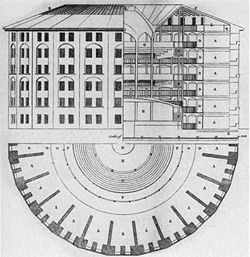
Legal punishment is normally justified by appeal to Wrongdoing (the criminal act) and Culpability (”the guilty mind”). These are features focusing on the perpetrator, which makes sense as it is he (nearly always a ”he”) who will carry the burden of the punishment. We want to make sure that the punishment is deserved.
But it is also typically justified by appeal to societial well-being. To protect citizens from harm, to promote the sense of safety, to reinforce certain values, to prevent crime by threatening to punish, to rehabilitate or at least contain the dangerous. According to so-called ”Hybrid” theories, punishment is justified when these functions are served, but only when it befalls the guilty, and in proportion to their guilt (this being a function of wrongdoing and culpability). Responsibility/culpability constrain the utilitarian function. Desert-based justification is backward-looking, while the utilitarian, pro-social justification is forward-looking. (Arguably, the pro-social function is dependent on the perceived adherence to the responsibility-constraint.)
Neuroscientist and total media-presence David Eagleman had a very interesting article in The Atlantic a while ago, pointing out that revealing the neural mechanisms behind certain crimes tends to weaken our confidence in assigning culpability. Rather than removing the justification for punishment, Eagleman suggests that we move on from that question:
You don’t really care for music, do you?
17 juni 2010 | In Emotion theory Moral Psychology Psychology Psychopathy | Comments?One of the topics that interests me concerning psychopathy is the relationship between the near absence of moral values and the possibility of presence of other values, like aestethic ones. One of the main charachteristics of psychopaths is ”shallow emotions”, but shallow emotions is clearly emotions to, and might be sufficient to develop at least the beginnings of a value system. The difficulties they have with emotional learning, however, suggests that these value systems may lack some features that we find in the normal population (whether constancy or flexibility, presumably qualified as being of the ”right kind”. These will turn out to be tricky matters to cash out without normative terms). Further investigations into these issues should be revealing both concerning the nature of psychopathy and the relation between moral and other values.
It also got me thinking about ”local” psychopathy. I have at least some situationist leanings and wouldn’t rule out the possibility that most people might be psychopathic under certain circumstances. While drunk, say, or while under stress.
If psychopathy is a distinctively moral affliction, could one be a local psychopath with regard to some other set of values? Could tone deaf people be described as ”musical psychopaths”? I. e. they can identify good music and even derive some pleasure from it, but still they’re not quite getting it, and they cant predict or join in in the same almost intuitive sense that musical people can. I believe the analogy could be informative, in particular with regard to the distinction between genetic, psychological and environmental factors in shaping the relevant abilities.